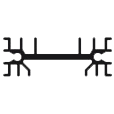
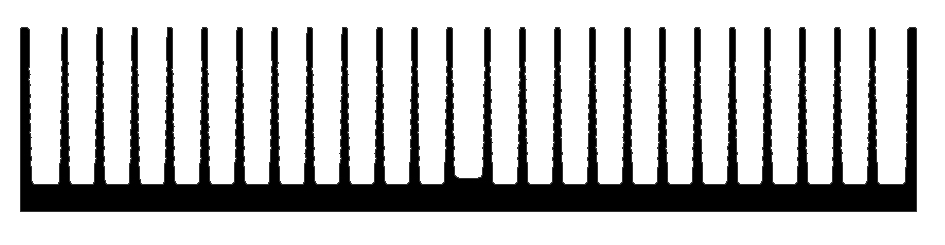
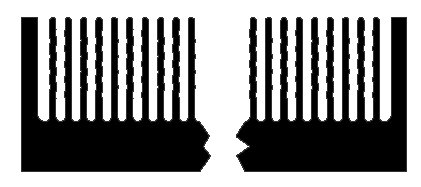
The products are presented in order of size, expressed in millimetres, with corresponding graphs showing thermal resistance and pressure drop as the coolant flow varies. The graphs refer to some of the countless possible configurations of the various manufacturing technologies.
Each LCP project is developed and manufactured according to precise design specifications, ensuring an optimised product right from the prototyping stage. Mecc.Al’s Technical Department uses a modern CFD calculation system which, for the different configurations of the cooling channels, allows the reliability of the design specifications in terms of thermal resistance and pressure drop to be verified.
The technical data reported is derived from software simulations and laboratory tests, according to the assembly layout shown in the drawing and considering the maximum point temperature reached on the surface of the LCP. The coolant used is pure water at an inlet temperature of 40 °C and a pressure of 202,650 Pa.
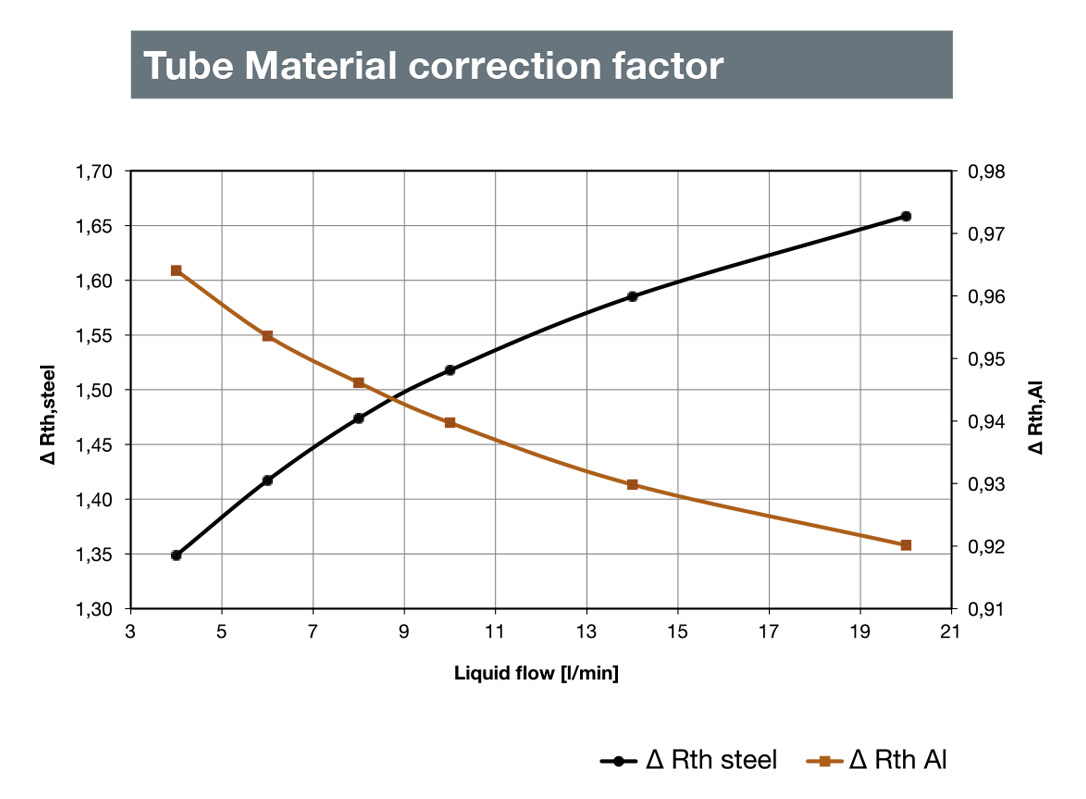
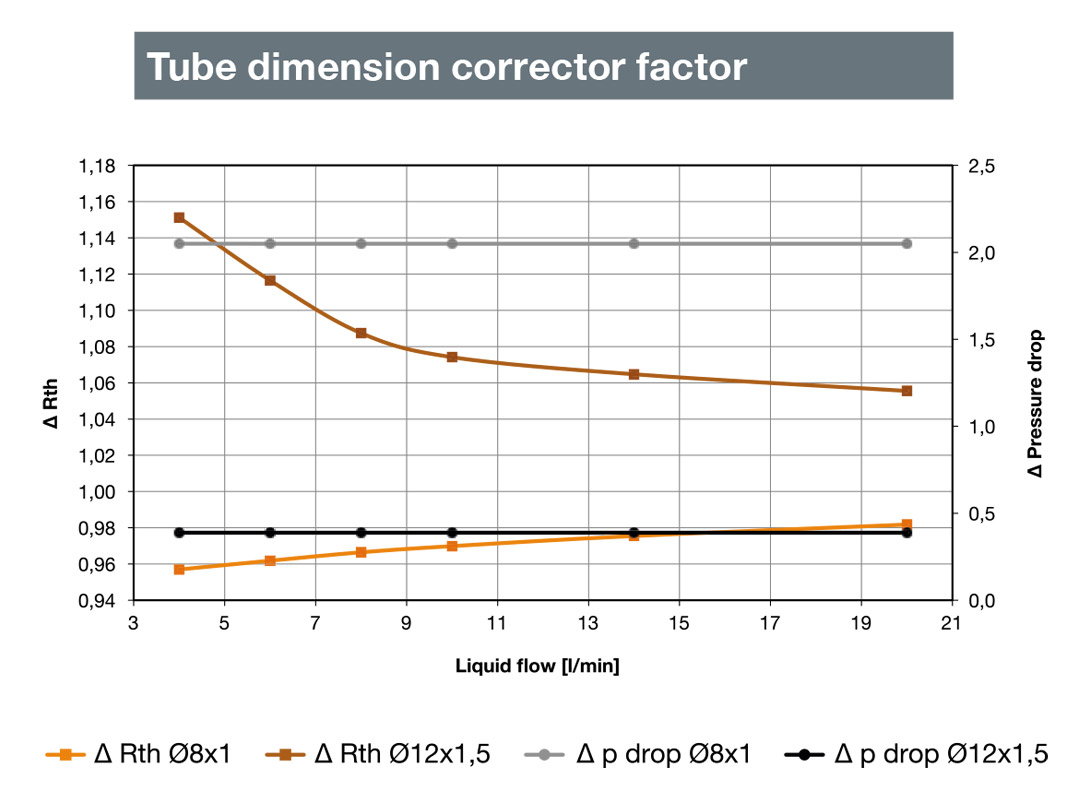
In assembled tube technology, the coils are made of copper, with a diameter of 10 mm and a wall thickness of 1.5 mm. For different tube materials and sizes, please refer to the ‘Tube Material correction factor’ and ‘Tube Dimension correction factor’ graphs to determine the multiplication factor to be applied to the indicated thermal resistance and pressure drop values.
The design flexibility of Mecc.Al liquid technologies offers various possibilities for the positioning of the coolant inlet and outlet terminals, as well as a wide range of fittings types that can be assembled.
Standard fittings:
- soldered or brazed brass fittings with male/female GAS thread or hose adapter
- stainless steel/brass push-on fittings with ogive
Custom connectors:
- turned copper/brass soldered or brazed fittings
- copper or steel connector blocks soldered or brazed to the ends of the pipe and mechanically assembled to the base plate
- aluminium fittings or blocks brazed or mechanically assembled
Surface treatments:
Anodising, passivation and nickel plating, applicable depending on the construction technology used, have a negligible effect on thermal performance but are mainly used to improve surface corrosion resistance.
Every single LCP produced by Mecc.Al undergoes leakage testing and tracking.
The technical data reported, derived from laboratory tests and thermal simulations, are to be considered reliable. However, since actual conditions of use may differ from those in the laboratory, it is advisable to verify them through empirical testing under the actual conditions of use of the LCP.